My work as an Instructional Technologist and Digital Media Specialist has stretched my work across many forms and topics. This is a selection of my work that I feels gives a lens into what I have been able to do before. However, this field is always expanding and my research takes me new places daily, so feel free to get in touch to discuss what I'm currently working on. (Some recent projects include 360 degree video, Augmented/Virtual Reality, and Makerspace design...)
Video Production Samples
These are a few samples of my work. I've included some footage from the Lightboard, a brief faculty lesson, a screencast, an interview, and a few more. Feel free to scroll through and watch these clips. With instructional video, there is a wide spectrum of production value and pedagogical goals, so every project is different. I find this fact delightful, as I am always getting to experiment, learn, and discover new things with every project.
Video Production Samples
Video Production Samples

Lightboard Lesson Example
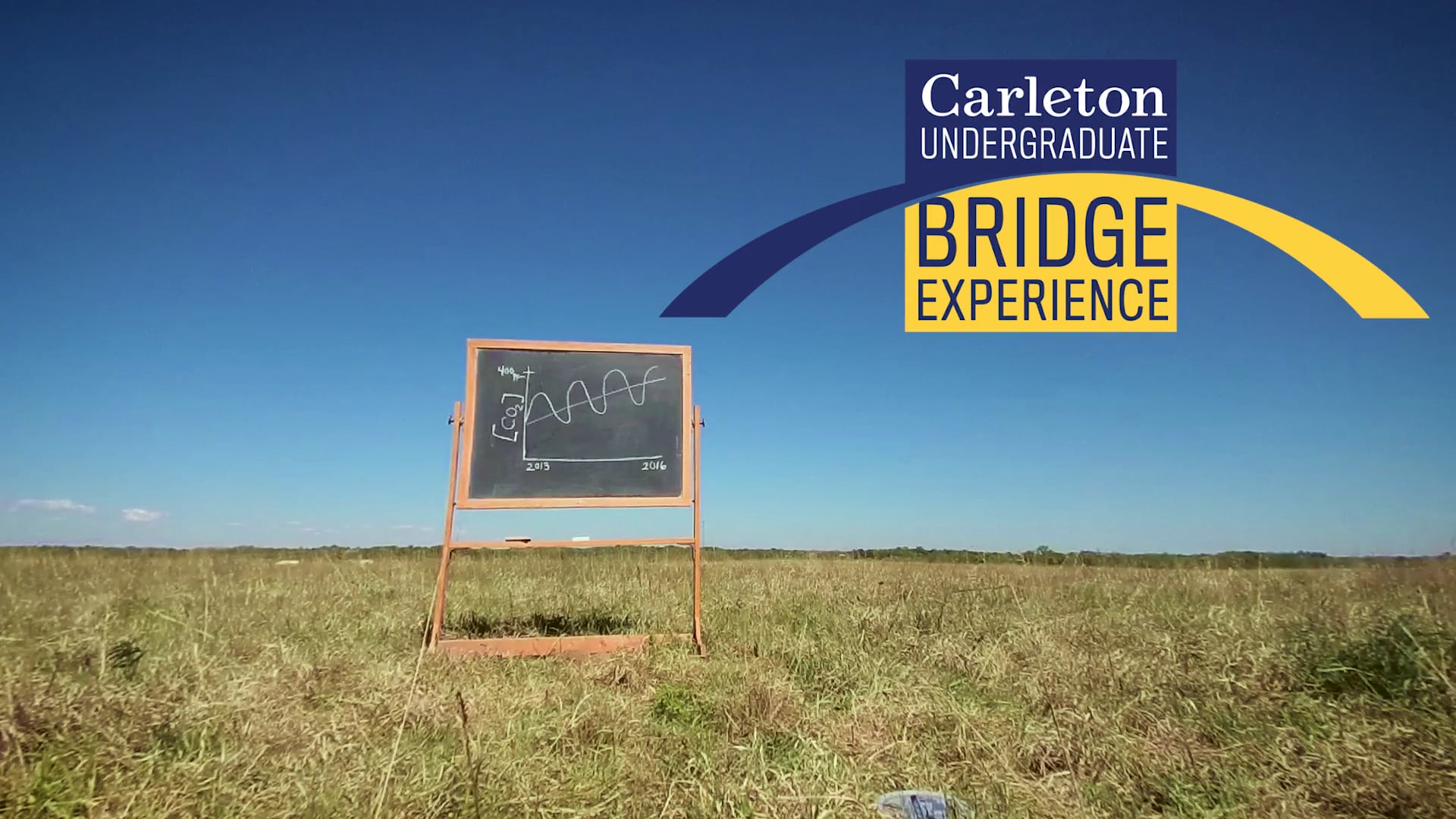
Dan Hernandez and the Keeling Curve-CUBE-2016
Minute to Learn it: Filtering and Labeling Gmail Messages
Anne Groton & Rob Hardy, Latin Class, Broadening the Bridge, 2015
Instructional Website Design
Website design takes a combination of semi-contradictory skills. It can be tough to balance good design, technical requirements, and instructional integrity. This website is a good example of what I aim to achieve in designing instructional websites.
Screenshots from the Lightboard Training website
Click here to visit the Lightboard Training website.
This project was designed to help train a set of 20+ media production student workers per year at Carleton College in each aspect of using the Lightboard to produce instructional videos. The Lightboard, an illuminated clear glass whiteboard, is a useful tool for efficiently producing large amounts of engaging instructional videos. However, using the Lightboard and creating content is a complex process; before this course only two professional staff were trained in its use, limiting its appeal and usage. By designing an asynchronous, comprehensive training experience divided into distinct modules, I hoped to have all of our student workers trained on how to use this tool in under a term.
Our student workers completed this training over the course of this current term, resulting in a massive increase in availability for the Lightboard. Every student media production worker is now able to set up the Lightboard, shoot the specialized footage, and perform the complex editing process. Previous training efforts in the media production department relied on long, in-person workshops that struggled with attendance and information retention; the Lightboard asynchronous training was part of a successful experiment that has now expanded to our entire training process.
This project has been influential for multiple reasons. It has allowed me to utilize my training from various ETL courses to produce a quality, modern, and pedagogically strong product. It showcases smart use of multiple educational technologies (websites, video, online quizzing, screencasts, and more) and is designed with the ADDIE model and other pedagogical theory in mind. It also has made the Lightboard, a valuable tool for educational technology, much more available at Carleton College and beyond. I've shared this training site with my colleagues at other institutions to help them develop their own training courses. They previously utilized my presentations and designs to help build low-cost Lightboards.


Conference Presentation: Low-Cost Lightboard
This video is a screencast of a talk I have given at two separate conferences. It showcases my experience researching, designing, and building a low-cost Lightboard. This talk was developed and recorded over the past year.
As I look forward in my career in Educational Technology, I recognize the value of creating low-cost, high-quality solutions to help create an equitable system of education. This talk ended up influencing the development of several low-cost Lightboards in Minnesota and I believe will have continuing downstream effects as it spreads. I’m looking forward to taking these ideas and continuing to develop effective solutions to difficult problems.